
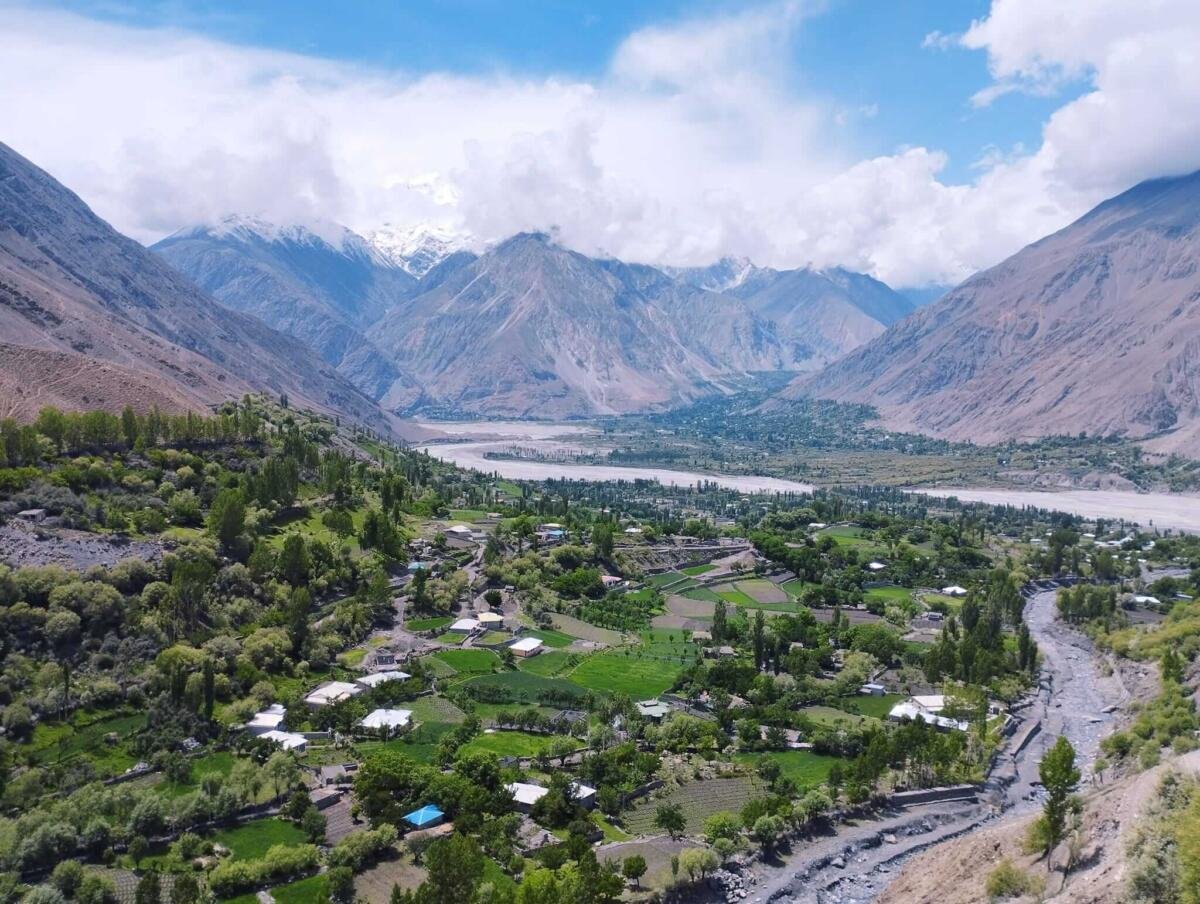
Ishkoman Valley is located in District Ghizer, Gilgit-Baltistan, Pakistan. It lies approximately 120 kilometres west of Gilgit City and can be accessed via the Gilgit–Ghizer Road. The valley extends towards the western boundaries of Gilgit-Baltistan and is surrounded by some of Pakistan's most magnificent mountain landscapes.
Nestled in the western part of District Ghizer, Gilgit-Baltistan, Ishkoman Valley is one of the region's most captivating and least explored destinations. Blessed with snow-capped mountains, fertile green landscapes, glacial rivers, alpine lakes, and centuries-old settlements, the valley offers an unforgettable experience for travelers seeking nature, adventure, and cultural immersion.
Stretching from the lower reaches of Ghizer towards the remote Pamir-Hindu Kush mountain region, Ishkoman Valley is often referred to as a gateway connecting some of the most spectacular trekking routes of northern Pakistan. The valley boasts extraordinary geographical diversity, ranging from lush agricultural fields and fruit orchards to high-altitude lakes and mountain passes.
Unlike many commercial tourist destinations, Ishkoman retains its pristine beauty and traditional way of life, making it an ideal destination for travelers looking to explore the authentic charm of Gilgit-Baltistan.
Ishkoman Valley is ecologically and geographically significant due to its unique location at the crossroads of the Karakoram, Hindu Kush, and Pamir mountain systems. The valley is home to numerous glacial streams, alpine meadows, and diverse wildlife habitats that contribute to the region's rich biodiversity.
The valley's spectacular landscapes are shaped by towering mountains, freshwater streams, and fertile lands that support local agriculture and traditional mountain communities.
Some of Ishkoman Valley's major attractions include:
Visitors travelling from Islamabad may reach Gilgit either by air or by road.
By Air: Islamabad to Gilgit: approximately 1 hour.
By Road: Islamabad to Gilgit via the Karakoram Highway: approximately 14–16 hours.
From Gilgit, visitors can travel towards Gupis and continue onward to Ishkoman Valley.
Approximate travel time: Gilgit to Ishkoman Valley: 3 to 4 hours.
Approximate travel time:
Ishkoman Valley can also be approached from Upper Chitral through seasonal mountain trekking routes that connect the two regions.
For adventure travelers visiting Karambar Lake and surrounding alpine areas, the Chitral route remains popular during the summer months.
Visitors travelling by road may use:
Access from Chitral is subject to weather conditions and route accessibility.
Ishkoman Valley serves as an excellent base for exploring several iconic destinations in District Ghizer and Upper Chitral.
Nearby attractions include:
Karambar Lake. Darkot Valley. Darkot Pass. Phander Valley. Khalti Lake. Gupis Valley. Yasin Valley. Shandur Pass. Broghil Valley. Langar Valley. Hundrap Valley and Hundrap Lake.
These destinations can easily be combined into a multi-day travel itinerary.
Accommodation facilities are available in various parts of Ishkoman Valley and nearby tourist destinations.
Visitors may find:
Additional accommodation options are available in:
Advance booking is highly recommended during the peak tourist season.
Best Time to Visit
The ideal time to visit Ishkoman Valley is from:
Winter months bring heavy snowfall and extremely cold temperatures, which may affect accessibility to upper regions of the valley.
To ensure a safe and enjoyable visit to Ishkoman Valley, travelers are advised to: