
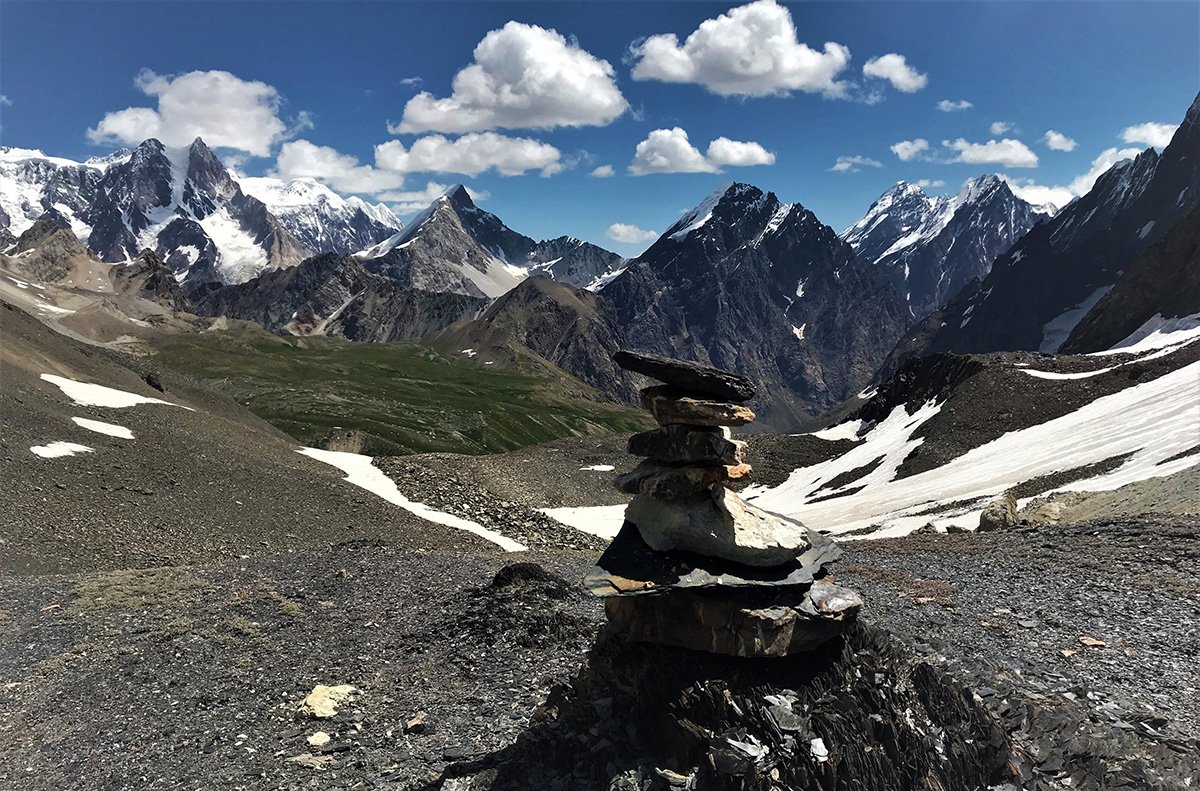
The journey to Darkot Pass offers visitors an unforgettable experience through some of the most pristine and untouched mountain scenery in northern Pakistan.
Darkot Pass is an ecological and geographical marvel that showcases the extraordinary beauty of Pakistan's northern mountains. The area is characterized by:
· Snow-covered mountain peaks.
· Massive glaciers and glacial streams.
· Alpine meadows and wildflowers during summer.
· Crystal-clear freshwater streams.
· Spectacular trekking routes.
· Panoramic views of the Hindu Kush mountain range.
· Rich biodiversity and high-altitude ecosystems.
One of the most remarkable features of the region is the Darkot Glacier, which offers breathtaking views throughout the trekking route. The glacier-fed streams and alpine landscapes provide excellent opportunities for photography and nature exploration.
The upper valley remains relatively untouched by commercial tourism, preserving its natural beauty and ecological significance.
Darkot Pass holds great historical importance as one of the ancient routes that connected Central Asia with the mountainous regions of present-day Gilgit-Baltistan and Chitral. Traders, travelers, and local communities historically used the pass for cultural and economic exchange.
The route is also believed to have been used during the era of the Great Game, when the mountainous frontiers of northern Pakistan attracted strategic interest due to their proximity to Central Asia.
Today, Darkot Pass stands as a reminder of the region's rich historical and cultural heritage.
Darkot Pass is located in the upper Darkot Valley of Yasin Tehsil, District Ghizer, Gilgit-Baltistan. The pass marks the historic connection between Yasin Valley and the Laspur Valley of Upper Chitral, Khyber Pakhtunkhwa.
Visitors can reach Darkot Pass by travelling to Gilgit either by air or by road.
· Islamabad to Gilgit by air: approximately 1 hour.
· Islamabad to Gilgit by road: approximately 14–16 hours.
· Gilgit to Yasin Valley: approximately 3–4 hours.
· Yasin Valley to Darkot Village: approximately 2–3 hours by road.
· Darkot Village to Darkot Pass: accessible via trekking.
· Skardu to Gilgit: approximately 4–5 hours.
· Gilgit to Yasin Valley: approximately 3–4 hours.
· Yasin Valley to Darkot Village: approximately 2–3 hours.
· Trek onwards to Darkot Pass.
Visitors travelling from Chitral can access Darkot Pass through Laspur Valley during the summer season.
· Chitral – Mastuj – Laspur Valley – Darkot Pass.
This historic trekking route connects Upper Chitral with Yasin Valley and is popular among experienced trekkers.
Visitors exploring Darkot Pass can also visit:
Darkot Village. Yasin Valley. Havaldar Lalak Jan Shaheed Mausoleum (Hundur Village). Karambar Lake. Ishkoman Valley. Shandur Pass. Phander Valley. Khalti Lake. Hundrap Valley and Hundrap Lake. Gupis Valley
These destinations can easily be included in a multi-day itinerary in District Ghizer.
Accommodation options are available in nearby locations, including:
· Tourist guest houses in Yasin Valley
· Family-run homestays in Darkot Village
· Tourist lodges
· Hotels in Gupis and Gilgit City
· Camping facilities along designated trekking routes
Trekkers planning to visit Darkot Pass are advised to make accommodation arrangements in advance, particularly during the summer trekking season.
Darkot Pass offers a variety of outdoor and adventure activities, including:
· High-altitude trekking
· Glacier exploration
· Camping
· Nature walks
· Landscape photography
· Cultural tourism
· Birdwatching
· Wildlife observation
· Mountain expeditions
· Stargazing
· Exploring traditional mountain villages
The pass is particularly popular among experienced trekkers seeking a challenging and rewarding adventure in the Hindu Kush mountains.
The ideal time to visit Darkot Pass is from:
· June to September
During these months:
· Trekking routes are generally accessible.
· Weather conditions are relatively favourable.
· Alpine meadows are at their most beautiful.
· Glacial landscapes can be safely explored with proper guidance.
Winter conditions make the pass inaccessible due to heavy snowfall and extreme weather.
For a safe and enjoyable visit to Darkot Pass, travelers are advised to:
1. Drive carefully on hilly and mountainous roads and avoid overspeeding.
2. Hire an experienced local guide or driver, particularly for trekking expeditions.
3. Check the latest weather forecast and route conditions before travelling.
4. Travel during daylight hours whenever possible.
5. Keep children under close supervision and avoid taking them on difficult trekking routes unless adequately prepared.
6. Maintain a safe distance from glaciers, rivers, and steep mountain slopes.
7. Carry warm clothing, sufficient drinking water, trekking equipment, and essential medicines.
8. Respect local customs, traditions, and cultural values.
9. Avoid entering private property, orchards, or agricultural lands without permission and refrain from causing damage to local livelihoods.
10. Help preserve the area's fragile ecosystem by disposing of waste responsibly and practising sustainable tourism.
Darkot Pass is far more than a mountain crossing—it is a place where history, adventure, and nature converge amidst some of Pakistan's most breathtaking alpine landscapes. Whether you are trekking across ancient routes, camping beneath the stars, or simply admiring the grandeur of the Hindu Kush, Darkot Pass promises an unforgettable experience.
Travel responsibly, respect the local communities and environment, and help preserve this extraordinary mountain heritage for generations to come.